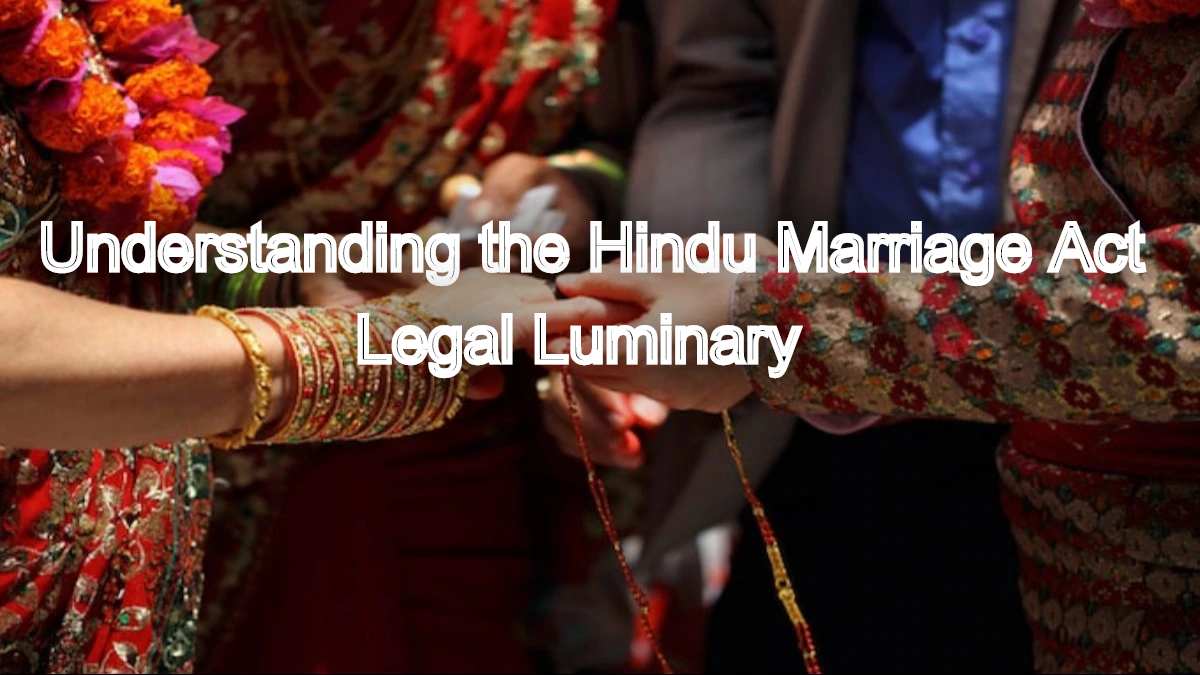
Navigating Marriage Laws: Understanding the Hindu Marriage Act
Navigating Marriage Laws – Marriage is a sacred institution. In India, it is also a legal contract. The Hindu Marriage Act of 1955 governs Hindu marriages. It applies to Hindus, Jains, Sikhs, and Buddhists. Consequently, it is an essential piece of legislation. It codifies the laws relating to marriage. Furthermore, it deals with divorce, judicial separation, and other related matters. At Legal Luminary, we believe in helping you understand this law. We aim to make this complex topic accessible. Therefore, we provide clear and expert legal guidance.
Navigating Marriage Laws: Understanding the Hindu Marriage Act: Legal Luminary
Conditions for a Valid Hindu Marriage
A marriage must meet specific legal requirements to be valid under the Act. First, both parties must be Hindu. Additionally, neither party should have a living spouse at the time of marriage. This means monogamy is a fundamental principle. If a person is already married, the new marriage is void and can lead to legal penalties. Furthermore, both parties must be of a sound mind. They must be capable of giving valid consent. They should not suffer from any mental disorder.
This ensures the consent is truly free. Next, the groom must be at least 21 years old. The bride must be at least 18 years old. Therefore, the age of consent is clearly defined. Finally, the parties must not fall within the degrees of prohibited relationship. This includes close blood relatives. The Act also prohibits marriage between sapinda relationships. This rule prevents marriage between a person and his or her ascendants up to a certain degree.
Ceremonies and Registration: The Legal Formalities
A Hindu marriage can be solemnized in many ways. It must be performed according to the customary rites and ceremonies of either party. These ceremonies can vary greatly. However, they must include the saptapadi. Saptapadi means the seven steps before the sacred fire. The marriage becomes complete and binding when the seventh step is taken. It is a crucial part of the ceremony. While the marriage is legally valid after the ceremony, registration is highly recommended. A marriage can be registered under the Act. Alternatively, it can be registered under the Special Marriage Act of 1954. Registration provides strong legal proof of the marriage. It is a public record. Consequently, it can be useful in many situations. For instance, it can be needed for passport applications, visa requests, or property inheritance. Thus, registration adds a layer of legal security.
Grounds for Divorce: Ending the Legal Union
Marriage is a lifetime commitment. However, sometimes a relationship breaks down irretrievably. The Hindu Marriage Act provides grounds for divorce. A divorce petition can be filed by either spouse. First, one common ground is adultery. If a spouse has had voluntary sexual intercourse with someone other than their partner, a divorce can be sought. Another ground is cruelty. This includes both physical and mental cruelty. For example, constant harassment or emotional abuse can constitute cruelty.
Furthermore, a person can seek a divorce if their spouse has been suffering from an incurable form of leprosy or a venereal disease. Also, if a spouse has not been heard from for seven years or more, the other can petition for divorce. This is known as a presumption of death. A person can also seek a divorce if the other has renounced the world. This is a complex legal point. In such a case, the person becomes a sanyasi. Lastly, there is the option of divorce by mutual consent. Both parties must agree to the divorce. They must live separately for a period of one year or more. Subsequently, they can jointly file a petition. This provides a simpler and less contentious way to dissolve the marriage.
Judicial Separation and Nullity of Marriage
Besides divorce, the Act also provides for judicial separation. This is a way to temporarily separate without ending the marriage. A spouse can petition the court for a judicial separation. The grounds for this are the same as those for divorce. If the court grants it, the couple is no longer obligated to cohabit. However, they are still legally married. They can subsequently file for divorce if they wish. Alternatively, they can reconcile and rejoin.
Furthermore, the Act distinguishes between void and voidable marriages. A void marriage is a nullity from the very beginning. For example, a marriage where one party has a living spouse is void. No court decree is needed to end it. However, it is always wise to get a court declaration. On the other hand, a voidable marriage is a valid marriage until one party gets a court order to annul it. For instance, if one party was a minor at the time of marriage, it is voidable. The minor can later petition for a decree of nullity.
Legal Remedies and Expert Counsel
The Hindu Marriage Act provides various remedies. It has provisions for alimony and maintenance. A court can order one spouse to provide financial support to the other. This can be either a lump-sum payment or a regular monthly allowance. The court considers the financial standing and needs of both parties. Additionally, the Act includes provisions for the custody and maintenance of children. The court decides on the best interests of the child. This is the paramount consideration.
Navigating these legal provisions can be daunting. The concepts of cruelty, adultery, and nullity can be complex. Furthermore, the procedures for filing a petition are specific. Therefore, seeking expert legal advice is essential. At Legal Luminary, we have a team of experienced lawyers. We specialize in family law. We guide our clients through every step of the process. Ensure their rights are protected. We handle all legal matters so they can focus on their personal well-being. Our approach is compassionate yet legally sound. We strive for justice and fairness in all cases.
FAQs on the Hindu Marriage Act
1. What is the difference between a “void” and a “voidable” marriage?
A void marriage is one that is considered invalid from the very beginning, as if it never happened. For example, a marriage where one party has a living spouse (bigamy) is void. It requires no court order to be dissolved, although a declaration is often sought for legal clarity.
2. What are the key grounds for divorce under the Hindu Marriage Act?
The Act provides several fault-based grounds for divorce, including adultery, which is voluntary sexual intercourse outside of the marriage, and cruelty, which can be physical or mental. Other grounds include desertion for a continuous period of at least two years, conversion to another religion, or a spouse suffering from an incurable mental illness or certain venereal diseases.
3. What is “judicial separation”?
Judicial separation is a legal remedy that allows a married couple to live apart without dissolving their marriage. The grounds for seeking judicial separation are the same as those for divorce. The court grants a decree of separation, freeing the couple from the obligation to cohabit, but they remain legally married.
4. Can Hindus marry within their family or clan?
The Hindu Marriage Act prohibits marriage between individuals who are within a prohibited relationship or are sapindas of each other. A prohibited relationship involves a close blood tie, like a brother and sister. The term sapinda refers to a relationship that extends to five generations on the father’s side and three generations on the mother’s side.
5. Is it mandatory to register a marriage under the Act?
While a marriage solemnized with customary rites and ceremonies is legally valid even without registration, getting a marriage registered is highly recommended. Some states have even made it compulsory.
Conclusion
The Hindu Marriage Act is a comprehensive law. It regulates every aspect of a Hindu marriage. From its solemnization to its dissolution, the Act provides a clear legal framework. However, understanding all its nuances requires professional help. At Legal Luminary, we are committed to providing the best legal assistance in this domain. We believe in empowering our clients with knowledge. Protect their interests with our legal expertise. We are dedicated to delivering excellence in advocacy and justice.
Read More
- Providing Legal Aid: Expertise in the Legal Services Authorities Act
- Facilitating Land Acquisitions: Understanding the Land Acquisition Act
- Managing Digital Transactions: Navigating the Information Technology Act
- Ensuring Fair Competition: Insights into the Competition Act
- Safeguarding Right to Information: Understanding the RTI Act
- Web Address for Tamil Nadu’s Registration Portal:
